
Probiotics: A Promising Ally in Burn Treatment
DOI:
https://doi.org/10.71079/ASIDE.IM.06022554Abstract
This review explores the potential therapeutic benefits of probiotics in the treatment of burn injuries, with the aim of addressing the limitations of traditional therapeutic approaches. It offers a comprehensive analysis of burn pathophysiology, including a wide range of burn forms and the biological reactions they induce, such as pain, inflammation, fluid imbalance, and metabolic alterations. It also specifically explains the mechanisms by which probiotics contribute to the improved healing of wounds and modified gut microbiota, as they are particularly effective in these two directions. This study looks at the ways probiotic treatment can facilitate the regeneration of the skin, which is crucial for accelerating burn recovery . Furthermore, it examines the barriers and limits of probiotic therapy, such as strain regularity and safety issues in immunocompromised patients, while emphasizing the interdependent benefits of probiotics and nutrition in promoting burn healing. This review highlights the advantages of probiotics in burn management and their potential as an adjuvant therapy for enhancing treatment results and patient well-being in the burn care context.
Keywords:
Probiotics, Burns, Inflammation, Gut microbiotaFull Text
Introduction
The intricate balance of the human microbiome plays a crucial role in maintaining health and well-being. To keep this balance intact, various strategies have been instituted. For example, probiotics are one such agent. These microorganisms help maintain gut health and beyond when taken in sufficient quantity. The potential health benefits of probiotics vary widely, from promoting digestion to enhancing immunity, thereby demonstrating their multipotent use in preventive and curative health applications [1]. One of the traumatic injuries that a human being can face is burns, characterized by skin damage due to exposure to heat, chemicals, electricity, or radiation. They represent a significant medical challenge due to their complexity and the broad spectrum of complications that can arise during the healing process [2]. Among the first major consequences of burn injury is the disruption to skin barrier function, which is a major insult; the dysbiotic disturbances to the microbiome may directly or indirectly contribute further to impaired wound healing, increased predisposition to infection, and systemic inflammatory responses[3]. The interaction between burns and microbiome dysfunction represents a potential new avenue of therapeutic intervention. Burns can seriously alter microbiome composition and thereby exert a deleterious effect on burn outcomes and recovery [4]. For instance, burns can also possibly help opportunistic pathogens colonize through disruption of the skin barrier, leading to invasiveness of infections of bacteria of the genus Staphylococcus, Pseudomonas, and Acinetobacter, as well as fungal organisms such as Candida Albicans [5]. The interrelationship between skin and gut microbiota with systemic immune response presents the possibilities for probiotic therapy for managing burn-induced microbiome dysfunctions. Thus, probiotic therapy could counteract detrimental effects on wound healing and wound infection secondary to burn due to its ability to modulate the host microbial ecology [6]. This review article seeks to explore the interface between burns and probiotic therapy. Reviewing the current research, this work intends to clarify the implication mechanisms of probiotics in burn recovery as demonstrated in the pediatric population through decreased hospital stay and wound healing outcomes [7], address microbiome dysfunctions, and ultimately contribute to optimizing burn treatment protocols. Through this narrative review, we aim to underscore the importance of integrating probiotic therapy into burn treatment protocols, paving the way for improved patient outcomes and advancing the field of burn care.
Methods
We conducted a comprehensive literature search using PubMed, Scopus, and Web of Science databases. The articles retrieved were from January 2015 until April 2025. Our research strategy across the databases included the following Mesh terms: “probiotic” OR “lactic acid bacteria” OR “Lactobacillus” OR “Bifidobacterium” OR “Saccharomyces boulardii and "burn*" OR "thermal injury" OR "burn wound" OR "burn patient" and “wound*" OR "wound healing" OR "cutaneous injury" OR "skin injury". We selected the articles that fit our inclusion criteria: patients above 18 years with skin wounds or burns regardless of the degree, patients using any type of probiotics, and articles that investigated the efficacy and safety of probiotics in patients with burns or wounds. All interventional and observational articles were included. Articles conducted on animals or in vitro were excluded, along with articles written in other than English. Additionally, articles that did not discuss probiotics as an effective treatment for patients with burns or wounds were excluded. The search strategy summary can be found in Table 1
| Item | Description |
| Date of search | Between January 2015 and April 2025 |
| Databases | PubMed, Scopus, Web of Science |
| Search terms | ("probiotic*" OR "lactic acid bacteria" OR "Lactobacillus" OR "Bifidobacterium" OR "Saccharomyces boulardii" OR "Bacillus coagulans" OR "Streptococcus thermophilus" OR "Enterococcus faecium" OR "Escherichia coli Nissle 1917" OR "Clostridium butyricum" OR "Leuconostoc" OR "Pediococcus" OR "Propionibacterium") |
| AND ("burn*" OR "thermal injury" OR "burn wound" OR "burn patient*" OR "scald*" OR "fire injury") | |
| AND ("wound*" OR "wound healing" OR "cutaneous injury" OR "skin injury" OR "ulcer*" OR "tissue repair" OR "lesion*" OR "skin regeneration") | |
| Inclusion criteria | Articles written in English, patients with skin wounds or any degree of skin burns, and using probiotics of any type |
| Exclusion criteria | Animal studies, articles written in different languages other than English |
| Selection process | K.J., J.N., L.M., and H.H. conducted the selection of articles. Consensus was reached with discussion among all authors. |
Discussion
The research has proved that probiotics play a significant role not only in the management of burn injury but also in the enhancement of clinical outcomes, accelerating the wound healing process, facilitating the absorption of nutrients, and modulating immune responses. However, the issue of safety is still open. For instance, probiotics have caused a reduction in hospital stays and wound healing in burn children [7]. Moreover, the skin barrier function of topical probiotics, e.g., Lactobacillus rhamnosus and Lactobacillus acidophilus, had been improved by the treatment, which resulted in reduced chemically induced changes of skin (erythema), as well as the subsequent processes: the reduced swelling and darkening of the skin, and the faster regrowth of the epidermis and the introduction of the protein called collagen into the wound [8,9,10,11,12]. For a patient with burns, the immune system can be given a Probiotic boost by B. fragilis, inducing the production of anti-inflammatory cytokines and reducing inflammation if applied carefully 1[13,14]. Additionally, Bacillus coagulans GBI-30, 6086 enhances amino acid absorption from milk protein, improving nutrient availability critical for tissue repair in burn recovery [15]. However, safety concerns, such as antibiotic resistance in Butyricicoccus pullicaecorum and the rare risk of Lactobacillus bacteremia in immunocompromised patients, underscore the need for strain-specific selection and careful monitoring to optimize therapeutic outcomes [16,17,18,19].
Biological and Physiological Responses to Burns
Healing wounds is a very complex process that occurs in tissues and organs of the body. It depends upon an immune-mediated response composed of four key stages: Hemostasis, Inflammation, Tissue Proliferation, and Tissue Remodeling Formation [20]. Any deficiency in one or the other of these processes may harm the body’s ability to heal wounds.
In brief: Hemostasis begins immediately after injury, wherein platelets aggregate and form a clot to prevent further bleeding and release a variety of growth factors such as PDGF and TGF-β to begin repair; inflammation soon follows where neutrophils and macrophages phagocytose pathogens and debris while releasing signals to promote repair. During proliferation, fibroblasts are activated to produce collagen III, while keratinocytes undergo re-epithelialization and angiogenesis to form granulation tissue. Remodeling involves the replacement of collagen III with the stronger collagen I, regression of blood vessels, and scar formation, allowing the wound to gradually gain strength over time [20].
Inflammatory and Immune response
Beyond the initial tissue damage, burns trigger a systematic inflammatory response. This response can be categorized into two phases: acute inflammation, crucial for healing, and chronic inflammation, which can lead to scarring if not properly managed. Effective inflammation management is essential to prevent complications like systemic inflammatory response syndrome (SIRS), multiple organ failure, and excessive scar formation [20].
Pain and sensory impact
Burns are also associated with significant pain, which varies based on factors like age, overall health, the cause of the burn, and its depth [21].
Metabolic response and nutritional needs
Metabolic rates increase greatly in major burns; thus, maintaining adequate nutrition is necessary to prevent muscle loss and promote wound healing. Accordingly, burn nutrition entails a well-balanced, closely monitored diet heavy in carbohydrates [22]. Finally, burn wound healing is a complex and slow process relying on the activity of the immune system. It progresses through three stages: inflammation, formation of tissues, and remodeling, with the risk of scarring along with these stages [23].
Mechanisms of Action of Probiotics in Burn Wound Healing
Burn-Induced Gut and Systemic Dysregulation
Severe burns produce extensive damage in the body, which triggers inflammation and affects multiple physiological systems and functions during their occurrence [24]. Severe burns have shown clear evidence of producing major gut microbiota changes and internal environment shifts. This demonstrates that the gut is a fundamental target site during acute infection, affecting patients from early to middle stages [25,26,27]. The modifications in microbial composition and increased intestinal permeability create essential changes that activate broad inflammation that affects immune functions across different organ systems since the gut microbiota serves as a crucial immune response controller during burn recovery, leading to multiple organ failure and severe critical illness outcomes [24,25]. The gut serves as the central system in response to burn injuries because alterations in gastrointestinal conditions affect patient outcomes through increased complications, while a large burn can lead to extensive systemic inflammation, which develops into multiple organ failure, sepsis, and systemic inflammatory response syndrome (SIRS) [6,24,25,28].
Gut Microbiome Composition and Burn Effects
Firmicutes, Bacteroidetes, Actinobacteria, and Verrucomicrobia, constitute the principal phyla of bacteria that make up the microbiome in a healthy gut [29]. The body relies on good bacteria to generate short-chain fatty acids (SCFAs), which form tight junctions to protect barriers. SCFAs perform a dual function by generating an anti-inflammatory response, which boosts immune cell tolerance in the gut, thus maintaining intestinal equilibrium [30]. Burn injuries cause damaged tissues to release cytokines and chemokines alongside danger-associated molecular patterns (DAMPs), which spread to the gut and various other tissues [26,31]. The altered fecal microbiome worsens barrier dysfunction [27,32], which triggers the intestinal epithelial barrier’s breakdown, enabling bacteria and their byproducts to move into the lymphatic system and blood circulation [26,33]. A burn injury causes a marked reduction in the microbiome’s total number of bacterial types, which results in decreased levels of beneficial bacteria such as Bacteroidaceae, Bifidobacterium, and Ruminococcaceae [25]. Conversely, there’s an increase in the potentially harmful bacterial family Enterobacteriaceae following a burn [34]. For example, invasive strains, such as Klebsiella species found outside their typical locations, can prompt dendritic cells to engulf pathogens and release inflammatory cytokines (IL-6, IL-12, and TNF). This process is strongly connected with the shift toward a Th1-type immune response [35].
Probiotic Role in Mitigating Gut Damage
The gut microbiota and the intestinal barrier permeability get altered due to burns and the underscored alterations in the microbiome composition. From here, probiotics play an important role in managing and reversing these damages [36]. The main research focus of recent years has centered on microbial ecosystem management, epithelial barrier protection, and immune system homeostasis [36].
General Benefits and Historical Use of Probiotics
Probiotics contribute to a healthy gut by introducing beneficial bacteria that support the digestive system and boost the immune system [37,38,39]. This was noticed long ago when people noticed an increase in life expectancy and decreased frequency of illness when ingesting yogurt and some mixes of bacteria. As understanding gut microbes deepens, probiotics, which are live microorganisms consumed effectively, have emerged to promote host health [39]. Probiotics also help prevent pathogens’ growth by competing for nutrients indispensable for properly developing and multiplying these pathogenic microorganisms. Research studies have established that Lactobacillus rhamnosus GG and Lactobacillus plantarum probiotic strains suppress the adhesion of pathogenic Escherichia coli to intestinal epithelial cells through various mechanisms. These include competition for binding sites on epithelial cells, co-aggregation with pathogens, and production of surface adhesins and extracellular proteins antagonistic to the pathogen adhesion [13,14,38].
Probiotic Metabolites and Gut Barrier Enhancement
Probiotics have been proven to produce metabolites that are helpful for the host and aid in strengthening the gut lining and controlling mucosal immune activity [36]. Metabolites such as secreted proteins, organic acids, indole, bacteriocins, hydrogen peroxide (H2O2), and nitric oxide (NO) are released through the action of probiotics, enhance the integrity and protective function of the gut barrier through mechanisms including increased mucus production, heightened antimicrobial activity, and strengthened cellular connections [40] . In addition, the surface parts of probiotics such as flagella, pili, surface layer proteins (SLPs), capsular polysaccharides (CPS), and lipopolysaccharides also play a role. They act by creating microbial-associated molecular patterns (MAMPs), communicating with special receptors on intestinal epithelial cells (IEC), and initiating a cellular signaling pathway that promotes the release of inflammation-fighting molecules such as cytokines and chemokines, ultimately enhancing the function and health of the gut lining [40].
Immunomodulatory Actions of Probiotics
New research shows that live probiotics in the gut and the substances they produce can interact with various immune cell types, supplying them with enhanced immunomodulatory properties [36]. Specifically, the production of IgA within the gut is stimulated by probiotics, contributing to an elevated number of IgA+ cells in the intestinal mucosa and promoting a robust IgA cycle. This process contributes to developing the humoral immune system and enhancing mucosal immune surveillance beyond the gastrointestinal tract [36,41]. Furthermore, probiotics influence immune responses through a well-defined regulatory mechanism by binding to pattern recognition receptors (PRRs) such as Toll-like receptors (TLRs), NOD-like receptors (NLRs), Dendritic Cell-Specific Intercellular adhesion molecule (DC-SIGN), and C-Type Lectin receptors (CLRs), triggering downstream signaling pathways mediated by adaptor proteins associated with nuclear factor-kappa B (NF-κB) and mitogen-activated protein kinase (MAPK) pathways [40]. This consequently turns on genes encoding cytokines, chemokines, and antimicrobial peptides [40]. Probiotics, however, have a complex effect on the immune system because they modulate immune responses, trigger them, and preserve immunological homeostasis. For example, certain probiotic species like Bacteroides fragilis induce immune tolerance by producing Polysaccharide A (PSA), a key capsular antigen that directly regulates host immunity. PSA is detected by Toll-like receptor 2 (TLR2) of gut mucosa-residing dendritic cells to activate the signaling pathway to produce more regulatory CD4+ T cells (Tregs) [42]. These Tregs secrete anti-inflammatory cytokines such as IL-10 and Transforming Growth Factor-beta (TGF-β) that exert their function to inhibit pro-inflammatory Th17 and Th1 responses and thus ensure intestinal immune homeostasis and prevent excessive immune activation [35].
Probiotic Impact on Wound Healing and Skin Regeneration
The Gut-Skin Connection in Burns
The skin microbiome, which consists of bacteria, fungi, and viruses, plays a role in maintaining health and immune responses. It has an impact on skin conditions [43]. The interactions between the microbiome and the immune system are crucial for wound healing, highlighting the importance of species in determining outcomes [44]. The diversity of microorganisms on the skin protects against pathogens, supports immunity, and influences the development of skin issues and chronic wounds [45]. Furthermore, the gut microbiota has a remarkable influence on skin health, where it emphasizes its role in shaping the skin microbiome’s dynamics and managing skin conditions [46]. Probiotics have been widely used as topical and oral methods to treat numerous dermatological conditions [47]. Probiotics are promising to reduce wrinkles by suppressing the synthesis of matrix metalloproteinase-1 (MMP-1) and antioxidant action, which minimizes collagen breakdown. Moreover, probiotics enhance the skin’s shininess by suppressing the synthesis of melanin and inhibiting the activities of tyrosinase, TYRP-1, and TYRP-2. They also provide proper hydration by strengthening the skin barrier and minimizing the trans-epidermal water loss (TEWL), promote anti-aging by inhibiting collagen cleavage and breakdown, and eliminate body odors via cutting down the strains associated with odor production [48]. Participants who received a high concentration of topical probiotic formula showed considerable improvement in the severity of wrinkle depth and hyperpigmentation on the forehead and glabella [8]. Moreover, experimental evidence suggests that Lactobacillus rhamnosus (LR) can significantly enhance the skin barrier, qualifying it as a moisturizing skincare product [9]. Also, lactobacillus acidophilus IDCC 3302 protects the skin epidermis from UV-induced photodamage by enhancing the skin’s antioxidant capacity, increasing hydration cytokines, and inhibiting the synthesis of MMPs by suppressing the MAPK loop [10]. Furthermore, applying topical probiotics decreased erythema and edema associated with CO2 laser therapy, alleviated skin sensitivity in individuals with reactive skin, and enhanced ceramide levels and skin hydration [11]. Various Lactobacillus species, such as Lactobacillus coryneform and Lactobacillus rossiae, have shown a potential to manufacture vitamin B12, accelerating wound healing. Additionally, Lactobacillus reuteri and Lactobacillus acidophilus enhance the absorption of dietary vitamins D and E, which are immensely important for wound healing [49]. In summary, probiotics taken via the oral route have three significant benefits. First, it influences the central nervous system, aiding in faster tissue regeneration. Second, it enhances the immune system by increasing lymphocyte recruitment. Lastly, it improves nutrient absorption [43,44]. Figure 1.
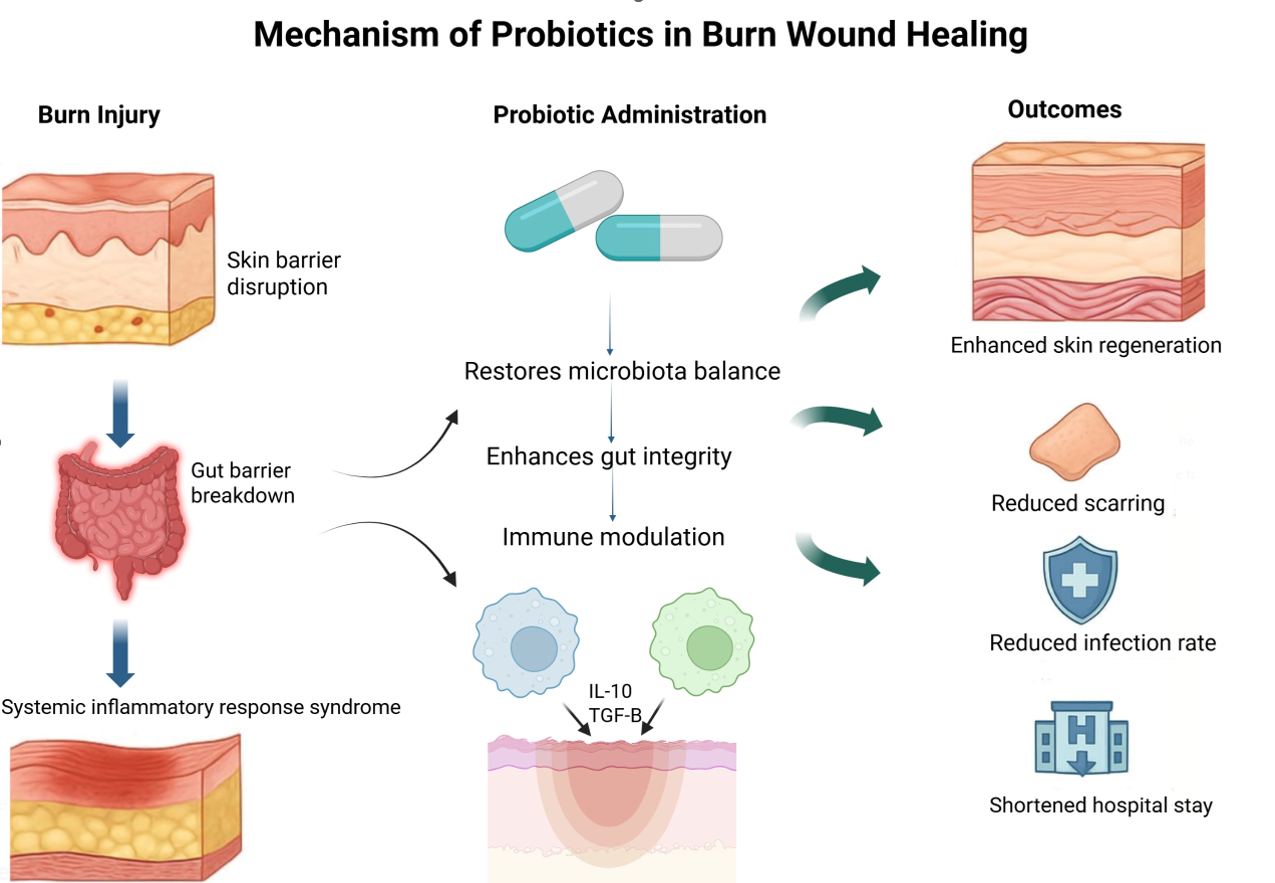
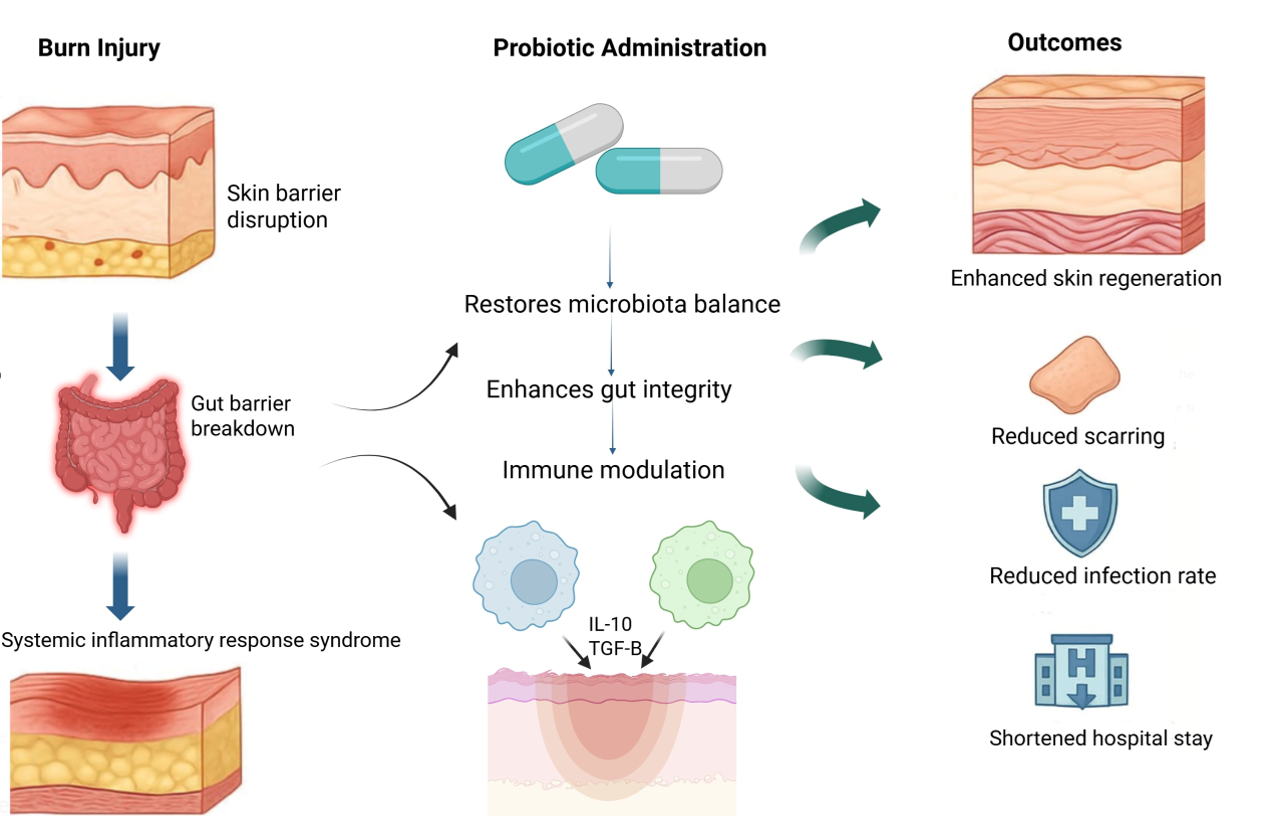
Probiotics promote burn wound healing by restoring gut microbiota balance disrupted by burns, counteracting dysbiosis with strains like Lactobacillus to inhibit pathogenic Escherichia coli adhesion. They enhance gut integrity through metabolites like SCFAs, strengthening epithelial barriers to prevent bacterial translocation and reduce systemic inflammation. Bacteroides fragilis modulates immunity by inducing Tregs and anti-inflammatory cytokines (IL-10, TGF-β) via PSA and TLR2 signaling.
Potential challenges and limitations in probiotic treatment for burn wounds
Standardization Issues
The lack of standardized varieties and dosages can prevent the utilization of probiotics for treating burn wounds. Without well-defined protocols for selecting and administering probiotic strains and doses, there is a risk of obtaining unreliable results, ultimately diminishing the therapeutic effectiveness of such treatment [50]. Determining the right probiotic dose for healing burn wounds is critical but can be complex. The severity of the burn, the patient’s immunological condition, and the delivery route can all impact how successful probiotic therapy is [50].
Implementation barriers
In addition, to have any good benefits, probiotic strains must withstand the severe circumstances of the burn site. Probiotics’ viability and survival are impacted by factors such as pH, temperature, and interactions with other bacteria in the wound [51]. However, additional investigation is required to understand the mechanism of action, optimum strain, cost-effectiveness, and optimal dose and duration of therapy for probiotics in burn patients [50,51,52]. Additionally, until now, there are no specific guidelines to follow in conducting trials (in vivo and in vitro) to assess possible probiotic strain toxicity and side effects [18].
Not only do probiotics influence the immune system in burn patients, but research also implies that they result in beneficial effects such as a decreased mortality rate and shorter hospital stays [53].
Safety concerns
Bacteremia, fungemia, septicemia, pneumonia, and abdominal abscesses are some of the hazards associated with probiotics. As a result, it is critical to properly assess the risk-benefit ratio before using probiotics in this population [12,19]. One clinical trial showed that a probiotic containing Butyricicoccus pullicaecorum strain had several antibiotic resistance genes and carries the risk of horizontal transfer [18].
Probiotic therapy’s role should be understood from managing the burn injuries perspective. Research, including that by Moghadam et al., shows that when probiotics are used together with antibiotics like tetracycline, they can synergistically combat antimicrobial-resistant strains of Pseudomonas aeruginosa found in burn wounds, potentially enhancing the effectiveness of treatments [19]. Nonetheless, the outcome of such interactions can be unpredictable, with the potential for antagonistic effects that might diminish the overall effectiveness of the treatments [19]. On the other hand, other studies have concluded that the direct application of probiotics on burned surfaces, like Lactobacillus plantarum and Saccharomyces cerevisiae, could control the inflammation, speed up epithelialization, and enhance collagen deposition on the burn wound surface [12]. However, the promise offered to burn patients with probiotics is partially hampered by the interference with gut flora and the gut environment, a prerequisite for the absorption of orally administered medications.
Challenges in immuno-compromised people
Further, the administration of probiotics in immunocompromised burn patients carries risks. It demands careful selection and control of the strains used so that infection is not enhanced, as noted by Mayes et al. [52]. Several cases of Lactobacillus bacteremia have been documented, and they are linked to probiotic use in immunocompromised patients [16,17]. The risk of bacteremia is particularly relevant in patients undergoing hematopoietic cell transplants. Moreover, some studies have shown that probiotics can induce many infections and, subsequently, severe sepsis, especially if administered incorrectly (intravenously) in immunocompromised patients [54]. Additionally, some probiotic strains, like enterococci, have virulent traits and antibiotic resistance, making them dangerous for the vulnerable population [55].
It’s crucial to note that probiotics differ in effect in immuno-compromised people and healthy individuals of different ages and physical statuses. Thus, more clinical trials and studies are needed to tackle these differences [18].
Probiotics and Nutrition: Synergistic Effects on Burn Recovery
Probiotics can aid nutrient absorption, which is crucial for tissue repair and overall health during recovery [56]. While nutrients are essential for burn recovery, their absorption and utilization by the body may depend on the presence and activity of beneficial bacteria in the gut: probiotics [11,57].
Probiotics function as essential microorganisms in maintaining host functions and physiological balance, which includes decreasing harmful bacteria while supporting immune modulation and infection prevention, as well as gastrointestinal enhancement and bacterial translocation reduction after thermal shock [11,56,57]. Probiotics’ immune system modulation abilities work through two distinct mechanisms, which include direct enhancement of macrophage function and natural killer cell activity and lysozyme performance and T lymphocyte response and indirect improvement of gut epithelial barrier function together with mucus secretion changes and bacterial competition effects [39,58].
A research team investigated with 30 healthy participants how the probiotic Bacillus coagulans GBI-30, 6086 (BC30) affects protein absorption in milk. The research lasted two weeks, during which participants consumed 25 grams of milk protein with or without the probiotic. Participants who took the BC30 strain demonstrated increased levels of important amino acids within their blood, including arginine, isoleucine, and methionine. The outcomes demonstrated that particular amino acids reached the bloodstream at an accelerated pace, which suggested better digestive processing and absorption [15].
Clinical evidence from studies
Perai MC et al. (2009) suggested that according to a randomized control trial, a group of 80 burn patients with varying degrees of injury, Lactobacillus plantarum probiotics were capable of treatment of the burns and burns complication "infection" by comparison with silver sulphadiazine (SD-Ag). This was accomplished by affecting and killing the microorganisms in the wound, thus promoting healthy tissue [59]. The research conducted by Mayes T et al. in 2015 examined the safety of probiotics in 20 acutely burned children through probiotic and placebo treatment twice daily. The probiotics group in Mayes’ study displayed a reduced wound healing period, while control group patients required an excision/graft procedure [52]. In a study by El-Ghazely MH and colleagues 2016, a randomized double-blinded clinical trial examined probiotic effectiveness in 40 thermally injured pediatric patients by creating two groups that received control or probiotic treatment. The research discovered that patients in the probiotics group experienced lower diarrhea episodes, reduced infection rates, and shorter hospital stays, leading to improved pediatric outcomes, from decreased hospitalization periods to faster wound recovery times [7]. These findings suggest that probiotics contribute to tissue healing in burned patients and decrease the financial and economic crisis by preventing infection. Various research reports present clinical data demonstrating probiotics as an effective treatment approach for burn wound management. During the treatment of a 47-year-old patient who had sustained 54% deep-dermal and full-thickness flame burns colonized with extremely drug-resistant (XDR) metallo--lactamase (MBL VIM) Pseudomonas aeruginosa, his wounds developed non-healing and breakdown [18]. A daily intake of Yakult drink containing Lactobacillus casei Shirota produced notable alterations in wound cultures in two weeks, which converted P. aeruginosa strains from multi-drug resistant to multi-drug sensitive [18]. The administration of probiotics directly connects to enhanced bacterial susceptibility because the modified antibiotic sensitivity pattern remained effective until the patient left the facility. The administration of probiotics leads to changes in the gut microflora, which subsequently affects how bacteria colonize wounds. Lactobacillus plantarum is a promising antibacterial and healing agent that could serve as a topical treatment for burn wounds [18].
Conclusions
In conclusion, probiotics should be considered in the treatment protocols for burns. They offer a unique and promising approach to burn treatment by showing fascinating capabilities in accelerating wound healing, enhancing skin regeneration, and fixing burn-induced microbiome dysfunctions. Probiotics could become a valuable tool in burn care by addressing gut dysbiosis and potentially enhancing healing and immune function. Aside from the benefits, further research is needed to optimize probiotic use in this setting, but the potential benefits are undeniable. Is it safe to prescribe probiotics for immuno-compromised patients? Should a standardized probiotic strain with a specific dosage be administered? Additional research is needed to address the current questions for optimal use. However, probiotics have a holistic approach to treating burn injuries, as per the review above. Hence, this paradigm shifts in burn treatments using probiotics or helpful bacteria is opening new doors for research.
The table environment is handy for marking up tabular material. If users want to use multirow.sty, array.sty, etc., to fine control/enhance the tables, they are welcome to load any package of their choice and cas-dc.cls will work in combination with all loaded packages.
中文摘要
益生菌:烧伤治疗的有前景的盟友
背景:本综述探讨益生菌在烧伤治疗中的潜在治疗益处,旨在解决传统治疗方法的局限性。
方法:对烧伤的病理生理进行全面分析,包括多种烧伤形式及其诱发的生物反应,如疼痛、炎症、液体失衡和代谢改变。进一步阐述益生菌通过改善创伤愈合和改变肠道菌群的机制,尤其在这两个方向上具有显著效果。
结果:研究考察了益生菌治疗促进皮肤再生的途径,这对于加速烧伤恢复至关重要。还评估了益生菌疗法的障碍与限制,如菌株一致性和免疫受损患者的安全性问题,并强调益生菌与营养相互依赖的益处,以促进烧伤愈合。
结论:本综述强调益生菌在烧伤管理中的优势及其作为辅助治疗的潜力,可提升治疗效果和患者福祉。
本中文摘要为机器辅助翻译,仅供参考;以英文摘要为准。 Machine-assisted Chinese translation of the English abstract; the English abstract is the version of record.
References
1. Sanchez B, Delgado S, Blanco-Miguez A, Lourenco A, Gueimonde M, Margolles A. Probiotics, gut microbiota, and their influence on host health and disease. Mol Nutr Food Res. 2017;61(1). [PMID: 27500859, https://doi.org/10.1002/mnfr.201600240].
2. Iddins CJ, DiCarlo AL, Ervin MD, Herrera-Reyes E, Goans RE. Cutaneous and local radiation injuries. J Radiol Prot. 2022;42(1). [PMID: 34488201, PMCID: PMC8785213, https://doi.org/10.1088/1361-6498/ac241a].
3. Delano MJ, Ward PA. The immune system's role in sepsis progression, resolution, and long-term outcome. Immunol Rev. 2016;274(1):330-53. [PMID: 27782333, PMCID: PMC5111634, https://doi.org/10.1111/imr.12499].
4. Corcione S, Lupia T, De Rosa FG, Host and Microbiota Interaction Study Group of the European Society of Clinical Microbiology and Infectious Diseases. Microbiome in the setting of burn patients: implications for infections and clinical outcomes. Burns Trauma. 2020;8:tkaa033. [PMID: 32821744, PMCID: PMC7428410, https://doi.org/10.1093/burnst/tkaa033].
5. Weinand C. Associated bacterial and fungal infections in burn wounds: Common factors, distribution in etiology, age groups, bacterial and fungal strands – Evaluation of a single burn center experience of 20 years. Burns Open. 2024;8(4). [https://doi.org/10.1016/j.burnso.2024.100363].
6. Kaistha SD, Deshpande N. Traditional Probiotics, Next-Generation Probiotics, and Engineered Live Biotherapeutic Products in Chronic Wound Healing. Springer. 2021:247-84. [https://doi.org/10.1007/978-981-16-2677-7_8].
7. El-Ghazely MH, Mahmoud WH, Atia MA, Eldip EM. Effect of probiotic administration in the therapy of pediatric thermal burn. Ann Burns Fire Disasters. 2016;29(4):268-72. [PMID: 28289360, PMCID: PMC5346305].
8. Notay M, Saric-Bosanac S, Vaughn AR, Dhaliwal S, Trivedi M, Reiter PN, Rybak I, Li CC, Weiss LB, Ambrogio L, Burney W, Sivamani RK. The use of topical Nitrosomonas eutropha for cosmetic improvement of facial wrinkles. J Cosmet Dermatol. 2020;19(3):689-93. [PMID: 31257694, https://doi.org/10.1111/jocd.13060].
9. Jung YO, Jeong H, Cho Y, Lee EO, Jang HW, Kim J, Nam K, Lim KM. Lysates of a Probiotic, Lactobacillus rhamnosus, Can Improve Skin Barrier Function in a Reconstructed Human Epidermis Model. Int J Mol Sci. 2019;20(17). [PMID: 31480681, PMCID: PMC6747158, https://doi.org/10.3390/ijms20174289].
10. Im AR, Lee B, Kang DJ, Chae S. Protective effects of tyndallized Lactobacillus acidophilus IDCC 3302 against UVB‑induced photodamage to epidermal keratinocytes cells. Int J Mol Med. 2019;43(6):2499-506. [PMID: 31017257, https://doi.org/10.3892/ijmm.2019.4161].
11. Knackstedt R, Knackstedt T, Gatherwright J. The role of topical probiotics on wound healing: A review of animal and human studies. Int Wound J. 2020;17(6):1687-94. [PMID: 32869480, PMCID: PMC7949352, https://doi.org/10.1111/iwj.13451].
12. Oryan A, Jalili M, Kamali A, Nikahval B. The concurrent use of probiotic microorganism and collagen hydrogel/scaffold enhances burn wound healing: An in vivo evaluation. Burns. 2018;44(7):1775-86. [PMID: 30078473, https://doi.org/10.1016/j.burns.2018.05.016].
13. Capurso L. Thirty Years of Lactobacillus rhamnosus GG: A Review. J Clin Gastroenterol. 2019;53 Suppl 1:S1-S41. [PMID: 30741841, https://doi.org/10.1097/MCG.0000000000001170].
14. Rocchetti MT, Russo P, Capozzi V, Drider D, Spano G, Fiocco D. Bioprospecting Antimicrobials from Lactiplantibacillus plantarum: Key Factors Underlying Its Probiotic Action. Int J Mol Sci. 2021;22(21). [PMID: 34769500, PMCID: PMC8585029, https://doi.org/10.3390/ijms222112076].
15. Gilliam CH, Brazelton de Cardenas J, Carias D, Maron Alfaro G, Hayden RT, Hakim H. Lactobacillus bloodstream infections genetically related to probiotic use in pediatric hematopoietic cell transplant patients. Infect Control Hosp Epidemiol. 2023;44(3):484-7. [PMID: 35225182, https://doi.org/10.1017/ice.2021.515].
16. Eze UJ, Lal A, Elkoush MI, Halytska M, Atif S. Recurrent Lactobacillus Rhamnoses Bacteremia and Complications in an Immunocompromised Patient With History of Probiotic Use: A Case Report. Cureus. 2024;16(2):e54879. [PMID: 38550408, PMCID: PMC10976466, https://doi.org/10.7759/cureus.54879].
17. Haranahalli Nataraj B, Behare PV, Yadav H, Srivastava AK. Emerging pre-clinical safety assessments for potential probiotic strains: a review. Crit Rev Food Sci Nutr. 2024;64(23):8155-83. [PMID: 37039078, https://doi.org/10.1080/10408398.2023.2197066].
18. Soleymanzadeh Moghadam S, Momeni M, Mazar Atabaki S, Mousavi Shabestari T, Boustanshenas M, Afshar M, Roham M. Topical Treatment of Second-Degree Burn Wounds with Lactobacillus plantarum Supernatant: Phase I Trial. Iran J Pathol. 2022;17(4):460-8. [PMID: 36532643, PMCID: PMC9745757, https://doi.org/10.30699/ijp.2022.551202.2863].
19. Almadani YH, Vorstenbosch J, Davison PG, Murphy AM. Wound Healing: A Comprehensive Review. Semin Plast Surg. 2021;35(3):141-4. [PMID: 34526860, PMCID: PMC8432991, https://doi.org/10.1055/s-0041-1731791].
20. Castana O, Anagiotos G, Rempelos G, Adalopoulou A, Kokkinakis C, Giannakidou M, Diplas DB, Alexakis D. Pain response and pain control in burn patients. Ann Burns Fire Disasters. 2009;22(2):88-9. [PMID: 21991161, PMCID: PMC3188217].
21. Clark A, Imran J, Madni T, Wolf SE. Nutrition and metabolism in burn patients. Burns Trauma. 2017;5(11):11. [PMID: 28428966, PMCID: PMC5393025, https://doi.org/10.1186/s41038-017-0076-x].
22. Markiewicz-Gospodarek A, Koziol M, Tobiasz M, Baj J, Radzikowska-Buchner E, Przekora A. Burn Wound Healing: Clinical Complications, Medical Care, Treatment, and Dressing Types: The Current State of Knowledge for Clinical Practice. Int J Environ Res Public Health. 2022;19(3). [PMID: 35162360, PMCID: PMC8834952, https://doi.org/10.3390/ijerph19031338].
23. Luck ME, Herrnreiter CJ, Choudhry MA. Gut Microbial Changes and their Contribution to Post-Burn Pathology. Shock. 2021;56(3):329-44. [PMID: 33481548, PMCID: PMC8292439, https://doi.org/10.1097/SHK.0000000000001736].
24. Shimizu K, Ogura H, Asahara T, Nomoto K, Matsushima A, Hayakawa K, Ikegawa H, Tasaki O, Kuwagata Y, Shimazu T. Gut microbiota and environment in patients with major burns - a preliminary report. Burns. 2015;41(3):e28-33. [PMID: 25465986, https://doi.org/10.1016/j.burns.2014.10.019].
25. McMahan RH, Boe DM, Walrath TM, Idrovo JP, Kovacs EJ. Aging, Cutaneous Burn Injury and Multi-Organ Complications: The Role of the Gut. Adv Geriatr Med Res. 2022;4(2). [PMID: 35913894, PMCID: PMC9328157, https://doi.org/10.20900/agmr20220004].
26. Pan YY, Fan YF, Li JL, Cui SY, Huang N, Jin GY, Chen C, Zhang C. [Analysis of the dynamic changes in gut microbiota in patients with extremely severe burns by 16S ribosomal RNA high-throughput sequencing technology]. Zhonghua Shao Shang Za Zhi. 2020;36(12):1159-66. [PMID: 33379852, https://doi.org/10.3760/cma.j.cn501120-20200518-00271].
27. Lima KM, Davis RR, Liu SY, Greenhalgh DG, Tran NK. Longitudinal profiling of the burn patient cutaneous and gastrointestinal microbiota: a pilot study. Sci Rep. 2021;11(1):10667. [PMID: 34021204, PMCID: PMC8139985, https://doi.org/10.1038/s41598-021-89822-z].
28. Jandhyala SM, Talukdar R, Subramanyam C, Vuyyuru H, Sasikala M, Nageshwar Reddy D. Role of the normal gut microbiota. World J Gastroenterol. 2015;21(29):8787-803. [PMID: 26269668, PMCID: PMC4528021, https://doi.org/10.3748/wjg.v21.i29.8787].
29. Rooks MG, Garrett WS. Gut microbiota, metabolites and host immunity. Nat Rev Immunol. 2016;16(6):341-52. [PMID: 27231050, PMCID: PMC5541232, https://doi.org/10.1038/nri.2016.42].
30. Jeschke MG, van Baar ME, Choudhry MA, Chung KK, Gibran NS, Logsetty S. Burn injury. Nat Rev Dis Primers. 2020;6(1):11. [PMID: 32054846, PMCID: PMC7224101, https://doi.org/10.1038/s41572-020-0145-5].
31. Earley ZM, Akhtar S, Green SJ, Naqib A, Khan O, Cannon AR, Hammer AM, Morris NL, Li X, Eberhardt JM, Gamelli RL, Kennedy RH, Choudhry MA. Burn Injury Alters the Intestinal Microbiome and Increases Gut Permeability and Bacterial Translocation. PLoS One. 2015;10(7):e0129996. [PMID: 26154283, PMCID: PMC4496078, https://doi.org/10.1371/journal.pone.0129996].
32. Wrba L, Palmer A, Braun CK, Huber-Lang M. Evaluation of gut-blood barrier dysfunction in various models of trauma, hemorrhagic shock, and burn injury. J Trauma Acute Care Surg. 2017;83(5):944-53. [PMID: 28700414, https://doi.org/10.1097/TA.0000000000001654].
33. Odamaki T, Kato K, Sugahara H, Hashikura N, Takahashi S, Xiao JZ, Abe F, Osawa R. Age-related changes in gut microbiota composition from newborn to centenarian: a cross-sectional study. BMC Microbiol. 2016;16(90):90. [PMID: 27220822, PMCID: PMC4879732, https://doi.org/10.1186/s12866-016-0708-5].
34. Zhang CX, Wang HY, Chen TX. Interactions between Intestinal Microflora/Probiotics and the Immune System. Biomed Res Int. 2019;2019(6764919):6764919. [PMID: 31828119, PMCID: PMC6886316, https://doi.org/10.1155/2019/6764919].
35. Wang X, Zhang P, Zhang X. Probiotics Regulate Gut Microbiota: An Effective Method to Improve Immunity. Molecules. 2021;26(19). [PMID: 34641619, PMCID: PMC8512487, https://doi.org/10.3390/molecules26196076].
36. Stavrou G, Kotzampassi K. Gut microbiome, surgical complications and probiotics. Ann Gastroenterol. 2017;30(1):45-53. [PMID: 28042237, PMCID: PMC5198246, https://doi.org/10.20524/aog.2016.0086].
37. Maldonado Galdeano C, Cazorla SI, Lemme Dumit JM, Velez E, Perdigon G. Beneficial Effects of Probiotic Consumption on the Immune System. Ann Nutr Metab. 2019;74(2):115-24. [PMID: 30673668, https://doi.org/10.1159/000496426].
38. La Fata G, Weber P, Mohajeri MH. Probiotics and the Gut Immune System: Indirect Regulation. Probiotics Antimicrob Proteins. 2018;10(1):11-21. [PMID: 28861741, PMCID: PMC5801397, https://doi.org/10.1007/s12602-017-9322-6].
39. Liu Q, Yu Z, Tian F, Zhao J, Zhang H, Zhai Q, Chen W. Surface components and metabolites of probiotics for regulation of intestinal epithelial barrier. Microb Cell Fact. 2020;19(1):23. [PMID: 32024520, PMCID: PMC7003451, https://doi.org/10.1186/s12934-020-1289-4].
40. Rocha-Ramirez LM, Perez-Solano RA, Castanon-Alonso SL, Moreno Guerrero SS, Ramirez Pacheco A, Garcia Garibay M, Eslava C. Probiotic Lactobacillus Strains Stimulate the Inflammatory Response and Activate Human Macrophages. J Immunol Res. 2017;2017(4607491):4607491. [PMID: 28758133, PMCID: PMC5516745, https://doi.org/10.1155/2017/4607491].
41. Grice EA, Segre JA. The skin microbiome. Nat Rev Microbiol. 2011;9(4):244-53. [PMID: 21407241, PMCID: PMC3535073, https://doi.org/10.1038/nrmicro2537].
42. Stecker RA, Moon JM, Russo TJ, Ratliff KM, Mumford PW, Jager R, Purpura M, Kerksick CM. Bacillus coagulans GBI-30, 6086 improves amino acid absorption from milk protein. Nutr Metab (Lond). 2020;17(93):93. [PMID: 33110439, PMCID: PMC7585191, https://doi.org/10.1186/s12986-020-00515-2].
43. Canchy L, Kerob D, Demessant A, Amici JM. Wound healing and microbiome, an unexpected relationship. J Eur Acad Dermatol Venereol. 2023;37 Suppl 3:7-15. [PMID: 36635613, https://doi.org/10.1111/jdv.18854].
44. Bates M. The Role of the Skin Microbiome in Health and Disease. IEEE Pulse. 2022;13(4):8-13. [PMID: 36044472, https://doi.org/10.1109/MPULS.2022.3191384].
45. Mahmud MR, Akter S, Tamanna SK, Mazumder L, Esti IZ, Banerjee S, Akter S, Hasan MR, Acharjee M, Hossain MS, Pirttila AM. Impact of gut microbiome on skin health: gut-skin axis observed through the lenses of therapeutics and skin diseases. Gut Microbes. 2022;14(1):2096995. [PMID: 35866234, PMCID: PMC9311318, https://doi.org/10.1080/19490976.2022.2096995].
46. Habeebuddin M, Karnati RK, Shiroorkar PN, Nagaraja S, Asdaq SMB, Khalid Anwer M, Fattepur S. Topical Probiotics: More Than a Skin Deep. Pharmaceutics. 2022;14(3). [PMID: 35335933, PMCID: PMC8955881, https://doi.org/10.3390/pharmaceutics14030557].
47. Sharma G, Khanna G, Sharma P, Deol PK, Kaur IP. Mechanistic Role of Probiotics in Improving Skin Health. Probiotic Research in Therapeutics. 2022;3:27-47. [https://doi.org/10.1007/978-981-16-5628-6_2].
48. Lukic J, Chen V, Strahinic I, Begovic J, Lev-Tov H, Davis SC, Tomic-Canic M, Pastar I. Probiotics or pro-healers: the role of beneficial bacteria in tissue repair. Wound Repair Regen. 2017;25(6):912-22. [PMID: 29315980, PMCID: PMC5854537, https://doi.org/10.1111/wrr.12607].
49. Horseman TS, Frank AM, Shupp JW, Burmeister DM. Meta-Analysis of Publicly Available Clinical and Preclinical Microbiome Data From Studies of Burn Injury. J Burn Care Res. 2023;44(5):1041-50. [PMID: 37352011, https://doi.org/10.1093/jbcr/irad098].
50. Maslova E, Osman S, McCarthy RR. Using the Galleria mellonella burn wound and infection model to identify and characterize potential wound probiotics. Microbiology (Reading). 2023;169(6). [PMID: 37350463, PMCID: PMC10333784, https://doi.org/10.1099/mic.0.001350].
51. Mayes T, Gottschlich MM, James LE, Allgeier C, Weitz J, Kagan RJ. Clinical safety and efficacy of probiotic administration following burn injury. J Burn Care Res. 2015;36(1):92-9. [PMID: 25559730, https://doi.org/10.1097/BCR.0000000000000139].
52. Shrivastava S, Bhatu N. A Study on the Usage of Probiotics as a Safer Antipyretic. Journal of Cellular Signaling. 2023;4(2):73-7. [https://doi.org/10.33696/Signaling.4.093].
53. Bremmer F, Strobel P. [Mediastinal germ cell tumors]. Pathologe. 2016;37(5):441-8. [PMID: 27491549, https://doi.org/10.1007/s00292-016-0196-2].
54. Wang X, Yang Y, Huycke MM. Risks associated with enterococci as probiotics. Food Res Int. 2020;129(108788):108788. [PMID: 32036912, https://doi.org/10.1016/j.foodres.2019.108788].
55. Golchin A, Ranjbarvan P, Parviz S, Shokati A, Naderi R, Rasmi Y, Kiani S, Moradi F, Heidari F, Saltanatpour Z, Alizadeh A. The role of probiotics in tissue engineering and regenerative medicine. Regen Med. 2023;18(8):635-57. [PMID: 37492007, https://doi.org/10.2217/rme-2022-0209].
56. Han Y, Ren QL. Does probiotics work for bacterial vaginosis and vulvovaginal candidiasis. Curr Opin Pharmacol. 2021;61:83-90. [PMID: 34649216, https://doi.org/10.1016/j.coph.2021.09.004].
57. Neveling DP, Dicks LMT. Probiotics: an Antibiotic Replacement Strategy for Healthy Broilers and Productive Rearing. Probiotics Antimicrob Proteins. 2021;13(1):1-11. [PMID: 32556932, https://doi.org/10.1007/s12602-020-09640-z].
58. Peral MC, Martinez MA, Valdez JC. Bacteriotherapy with Lactobacillus plantarum in burns. Int Wound J. 2009;6(1):73-81. [PMID: 19291120, PMCID: PMC7951207, https://doi.org/10.1111/j.1742-481X.2008.00577.x].
59. Thomson CH, Hassan I, Dunn K. Yakult: a role in combating multi-drug resistant Pseudomonas aeruginosa? J Wound Care. 2012;21(11):566, 568-9. [PMID: 23413495, https://doi.org/10.12968/jowc.2012.21.11.566].
Data Availability Statement
This review article does not contain any new primary data. All information discussed is derived from previously published sources and publicly available databases, as cited in the manuscript.
License
Copyright (c) 2025 Kholoud Al Jebawi, Jobran Toami, Adel Ayash, Razan Salha, Mira Al Shoufy, Jamil Nasrallah, Naseeb Danaf, Lea El Ghawi, Layal Msheik, Hiba Hamdar

This work is licensed under a Creative Commons Attribution 4.0 International License.
Copyright and Licensing
All articles published in ASIDE Internal Medicine are open access and freely available online immediately upon publication, without embargo.
This journal applies the terms of the Creative Commons Attribution 4.0 International License (CC BY 4.0). Under this license, anyone may copy, redistribute, remix, transform, and build upon the material for any purpose, even commercially, provided that proper credit is given to the original author(s), a link to the license is provided, and any changes made are indicated.
-
License link: https://creativecommons.org/licenses/by/4.0/
-
Machine-readable license metadata is embedded in each article and its DOI record.
Copyright Holder
Copyright in all articles remains with the author(s). ASIDE Internal Medicine is published and owned by the American Society for Inclusion, Diversity, and Equity in Healthcare (ASIDE). By submitting a manuscript, authors agree to grant the publisher a non-exclusive license to publish, distribute, and archive the work under the terms of the CC BY 4.0 license.
Third-party Material
Any material (e.g., images, figures, or tables) not covered by CC BY 4.0 will be clearly indicated in the article. Users must obtain permission directly from the copyright holder for reuse of such third-party material.
Author Rights and Self-Archiving
Authors are permitted to deposit all versions of their work (preprint, author’s accepted manuscript, and version of record) in institutional or subject repositories of their choice immediately upon publication, without embargo, provided that the DOI and license information are included.
Published
Issue
Section
Categories
How to Cite
Article history
- Received
- 25 Mar 2025
- Received in revised form
- 9 May 2025
- Accepted
- 25 May 2025
- Published
- 2 Jun 2025